Managing Downstream Dependencies with the AI Engineer

Every coding assistant can generate a CRUD endpoint, scaffold a React component, or write a Terraform module. That’s impressive. But it turns out writing code was never the hard part of software engineering.
The hard part is understanding depenedencies.
When a senior engineer gets a ticket to rename a field, deprecate an endpoint, or upgrade a framework, they don’t open their editor and start typing. They spend most of their time asking a different set of questions:
- What depends on this?
- What breaks if I change it?
- Who owns those systems?
- How do I validate the change safely?
The hard problem isn’t code generation. The hard problem is context. And it turns out most AI coding agents have a structural awareness problem — they can read code and reason about it locally, but they routinely break things because they don’t understand how that code connects to everything else.
In this post, I want to walk through why that gap exists, what it costs in production, and how I’ve started using Postman as the organizational context layer that fills it.
The real cost isn’t writing the code
Imagine I rename a field in an API response — say, user_id becomes userId. Most coding agents can update the backend implementation in seconds. That’s the easiest part of the task.
The real work is downstream impact. Questions immediately emerge:
- Which frontend applications consume it?
- Which mobile clients consume it?
- Which integration partners rely on it?
- Which test suites validate it?
- Which background jobs serialize it?
The challenge isn’t generating the code change. The challenge is dependency discovery.
Engineering at scale is fundamentally graph traversal. The most valuable engineers in large organizations aren’t necessarily the fastest coders. They’re the people who hold the dependency graph of the business in their heads — they know that the payments service still calls the legacy user API, that the mobile team froze on a snake_case schema two quarters ago, and that the BI pipeline parses that exact field every six hours.
That knowledge is rarely written down. It lives in tribal memory, in shared Slack channels, and in the minds of engineers who’ve been around long enough to have been paged at 2 a.m. when the wrong field was renamed.
Why coding agents hit a wall
This is where most coding agents run into a fundamental limitation.
They’re extremely capable within the context window they’re given. They can ingest a repository, trace local imports, and produce a clean, well-formatted patch. But they generally operate on files, folders, or repositories.
They understand local code context. They don’t understand organizational context.
A coding agent can tell you which functions in your repo call getUser(). It can’t tell you which of the seventeen other services across your organization issue HTTP requests against /users/:id and parse the response. It can’t tell you which mobile build expects a specific field name, or which partner integration pipes the payload into a data warehouse.
The result is what I’d call confident locality — the agent produces a perfectly reasonable change inside its repo, and then a Slack incident channel lights up six hours later because the iOS team’s CI started failing.
You can throw more context at the model, but retrieval alone doesn’t solve this. For large codebases with complex dependency chains, a knowledge graph provides blast radius analysis and impact detection that flat context cannot. An agent editing a function without knowing that 47 other functions call it is, structurally, the same problem as an agent renaming an API field without knowing which 47 services consume it.
Engineering at scale is graph traversal
The senior engineer’s mental model isn’t magic. It’s a graph — a structured map of producers, consumers, contracts, owners, and validation surfaces. The reason senior engineers seem “slow” before they start typing is that they’re doing impact analysis in their heads, walking the edges of that graph one node at a time.
If we want AI agents to make safe changes at organizational scale, they need access to that graph. Not a synthetic version generated by inferring relationships from code, and not a one-shot snapshot fed into a prompt. They need a continuously maintained, queryable representation of the API surface across the entire organization — the substrate the agent walks before it writes a single line of code.
The challenge is that most companies don’t have that graph anywhere centralized. Service ownership lives in one tool. API specifications live in another (or nowhere). Consumer contracts live in spreadsheets. Test coverage is scattered across CI configs.
Unless — and this is the part that’s been quietly accumulating for a decade — those companies have been using Postman.
The substrate has been there all along
Postman has spent more than a decade as the system of record for APIs across millions of developers and hundreds of thousands of organizations. The Postman Collections, environments, API specifications, and workspaces that engineering teams have built up over the years are exactly the substrate the new generation of AI agents needs.
Every Postman Collection is, in effect, a documented consumer of an API — a structured artifact that says “this client makes these requests with these parameters and expects these response shapes.” Every workspace captures team ownership. Every monitor captures a live validation surface. Every spec captures the canonical contract.
We’re not starting from scratch. We’re activating context that’s already there.
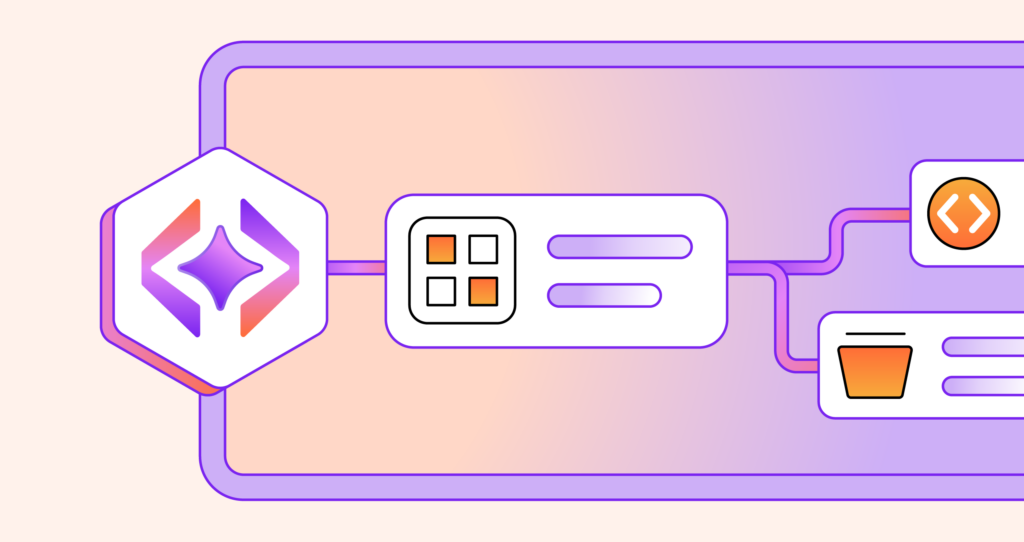
The Postman AI Engineer is powered by the Context Graph — a continuously updated map of the APIs, services, and dependencies across your Postman organization. When an agent starts a task, it doesn’t start from zero. It starts from the accumulated organizational knowledge that’s been sitting in your workspaces all along.
That distinction matters. As Postman CEO Abhinav Asthana put it, “context debt compounds: every new service, every new contract, every agent-generated change adds to the body of prior work” that future changes must comprehend. The agent that can read that debt is the agent that can pay it down safely.
What “downstream context” looks like in practice
Let me make this concrete. Here’s how I think about the downstream impact of a single API change when the organizational context is captured in Postman.
If I’m about to rename user_id to userId on the /users/:id endpoint, the first questions I ask the AI Engineer are: which Postman Collections include a request to this endpoint? What are the downstream dependencies of this endpoint?
In Postman, a Postman Collection that hits /users/:id is a documented downstream consumer. The team that owns that collection is, in practical terms, the team I need to talk to before I ship the change.
A real-world workspace might contain:
Workspace: Platform APIs
├── Users Service (canonical)
│   └── GET /users/:id
├── Mobile App Tests (consumer)
│   └── GET {{base_url}}/users/:id   ← consumes user_id
├── Web Dashboard QA (consumer)
│   └── GET {{base_url}}/users/:id   ← consumes user_id
└── Partner Integration Suite (consumer)
    └── GET {{base_url}}/users/:id   ← consumes user_id
That’s three downstream consumers I can identify before I write a single character of the rename PR. None of them are visible from the backend repo. All of them are visible from the Postman Context Graph.
With each prompt, the AI Engineer starts by querying the API Catalog, identifying consumers, running validation, and reporting back which downstream surfaces would break.
Where this goes
The pattern that’s emerging is that the bottleneck for AI in engineering isn’t model capability. It’s context capture.
Models keep getting better at code generation. But code generation without context produces confidently locally-correct, globally-wrong code. And the cost of that failure mode scales with the number of services, teams, and consumers downstream of any given change.
Resources
- Introducing the AI Engineer (Postman blog)
- The new Postman: AI-native and built for the agentic era
- Postman Agent Mode: A practical guide
- Postman workspaces documentation
- API specifications in Postman
- The Postman CLI reference
- Writing test scripts in Postman
- Consumer-Driven Contracts (Martin Fowler)
- Model Context Protocol specification



What do you think about this topic? Tell us in a comment below.