
Postman Product Update: December 2025

This year, we shipped features that close workflow gaps across the entire API lifecycle. We focused on improving how teams collaborate, making test automation more accessible, and preparing your APIs for the AI era.
This month’s update features new releases and highlights our most popular releases from 2025 across collaboration, test automation, and AI.
Let’s dive in.
Collaboration features that keep teams aligned
Context-switching kills momentum. When teams constantly bounce between tools, updates get lost in Slack threads and email chains, while version discrepancies between specs and code create confusion. This year, we shipped integrations and workflow improvements that keep everyone aligned and in the flow of work.
-
Our Jira integration was launched and now supports creating Jira issues from collections, collection runs, and responses, creating issues with custom and/or required fields, and creating issues across multiple Jira instances.
-
Our Slack and Teams integrations offer new ways to easily keep your team on top of API changes, including allowing you to connect your Teams and Slack channels when setting up Postman monitors.
-
The VSCode extension allows you to directly import .env files to configure a Postman environment, plus it now works in additional IDEs including Antigravity and Kiro.
-
Simplified variables behave the same whether you are building locally, testing, or deploying to production. Variables are kept private and not synced to the cloud by default, so you don’t have to worry about accidentally exposing sensitive data.
-
Notebooks provide a way to showcase real-world use cases for your APIs through interactive articles. Plus, developers can provide feedback via comments and reactions.
-
Workspace updates work with Public, Private, and Partner workspaces, so everyone knows when APIs are changed, added, or deprecated.
-
Collection status indicators clearly communicate what’s ready to use with preset tags (in-development, ready-to-use, or deprecated) or custom tags that match your workflow.
For more guidance on collaborating in Postman, explore Postman Best Practices for collaboration.
Test automation that streamlines secure testing
Testing private APIs means fighting with firewalls and VPNs. External monitors can’t reliably reach internal endpoints, scheduled monitors often catch issues too late, and without validation gates at release time, regressions can slip through to production. This year, we shipped features that make it easier to test APIs in real-world conditions without exposing infrastructure or managing complex workarounds.
-
On-demand monitors turn your existing health checks into release gates, so you can trigger monitors at deploy time and catch issues before users do.
-
Postman CLI with npm makes setup quick and familiar so teams can automate tests directly in CI/CD and roll out updates consistently across environments.
-
Private API runners execute tests securely inside your VPC, letting you validate APIs in real-world conditions without VPN workarounds or exposing infrastructure.
Learn more about leveraging test automation by exploring the Postman Best Practices for Test Automation.
API design and governance that scale with your systems
As teams build more APIs, complexity multiplies—and so does the cost of catching design flaws late in the development cycle. This year, we focused on features that bring clarity, consistency, and control to the earliest stages of API development so teams can move quickly without sacrificing quality. Whether you build code-first or spec-first, these capabilities help you create consistent, well-structured APIs from the start.
-
Spec Hub multi-file spec support breaks large OpenAPI files into modular components with cross-file references and intelligent autocomplete, preventing merge conflicts and making complex APIs easier to manage.
-
Bidirectional sync in Spec Hub keeps specs and collections aligned automatically. Update a collection and push changes back to the spec, or update collections when the spec changes.
-
Governance reports surface design and compliance issues early, helping you enforce standards across teams before problems reach production.
-
Collection types let you define request and response structures, whether you start with a formal spec or build directly in collections. View property details, get notified about required fields, and receive validation feedback before sending requests.
Learn more about effective API governance practices by visiting the Postman Best Practices for API Governance.
AI features that support AI-ready APIs
AI agents fail when they encounter slow APIs, inconsistent error messages, or incomplete documentation. Unlike developers, agents can’t adapt to poor interfaces. Even if you’re not building with AI directly, agents are already hitting your APIs through monitoring platforms, CI/CD pipelines, and third-party services that have quietly added AI features. This year, we shipped features that help you build AI-ready APIs and integrate AI into your workflow.
-
AI Agent Builder is a comprehensive suite that lets you evaluate LLMs and APIs, build agents with visual workflows in Flows, test agentic solutions locally, and discover APIs from the Postman API Network. Start with pre-configured templates for DevOps, support, and sales workflows, or use the Tool Generation API to build on your own platform.
-
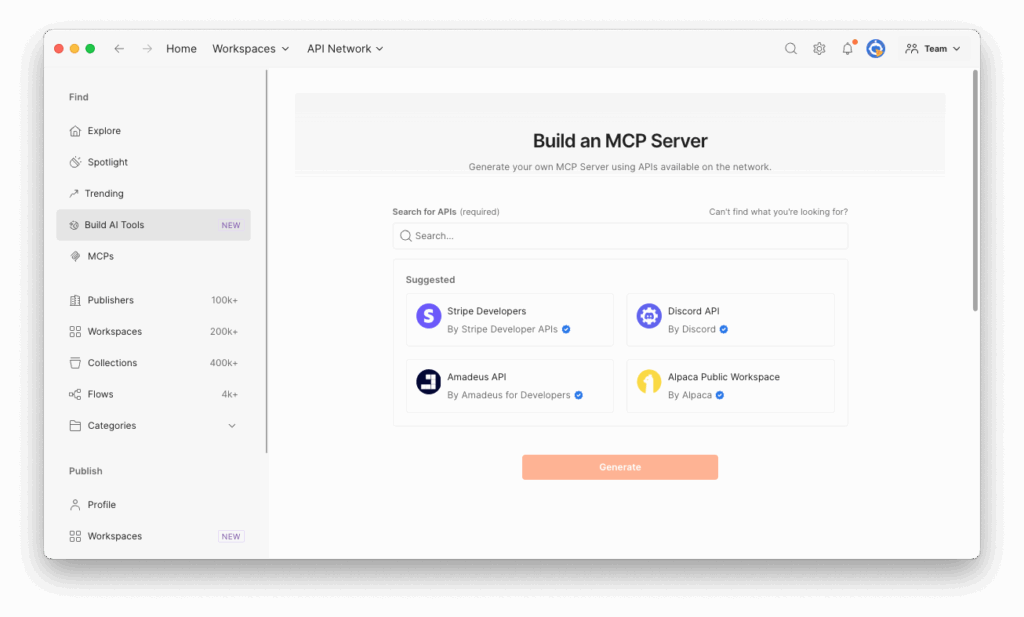
MCP support enables you to generate model-agnostic servers that work across Claude, Cursor, and other MCP-compatible tools, providing AI models with context from your trusted data sources and internal APIs.
-
MCP catalog provides a curated list of official MCP servers to use within Postman.
-
Flow Actions enable you to deploy workflows to the cloud with a single click and trigger them via API endpoints without managing the infrastructure. Actions are useful for running automations and exposing functionality as an API or as an AI tool for MCP servers.
-
Agent Mode unlocks a new way to build with your APIs by speeding up debugging, generating high-quality requests and tests, and even creating apps you can publish to the Public API Network. It works inside the workflows you’re already using, helping teams move from idea to working API much faster. (Available now, with Enterprise access coming soon)
Check out our Agent Mode playlist to start experimenting. Hint: To get a head start on the Agent Mode Community contest, pay attention to use cases like debugging or adding apps to the Public API network that could improve your team’s workflows.
Additional updates
We hear your feedback. You’ve told us about the friction points that slow you down: managing different script types across protocols, losing track of workspaces, switching from terminal to browser just to test an endpoint, struggling to find internal APIs, and jumping between tools for routine tasks. Since our last update, we’ve shipped features you’ve been asking for that solve real workflow problems.
-
Multi-script support for multi-protocol collections lets you write scripts once and reuse them when running GraphQL or gRPC requests without maintaining separate versions.
-
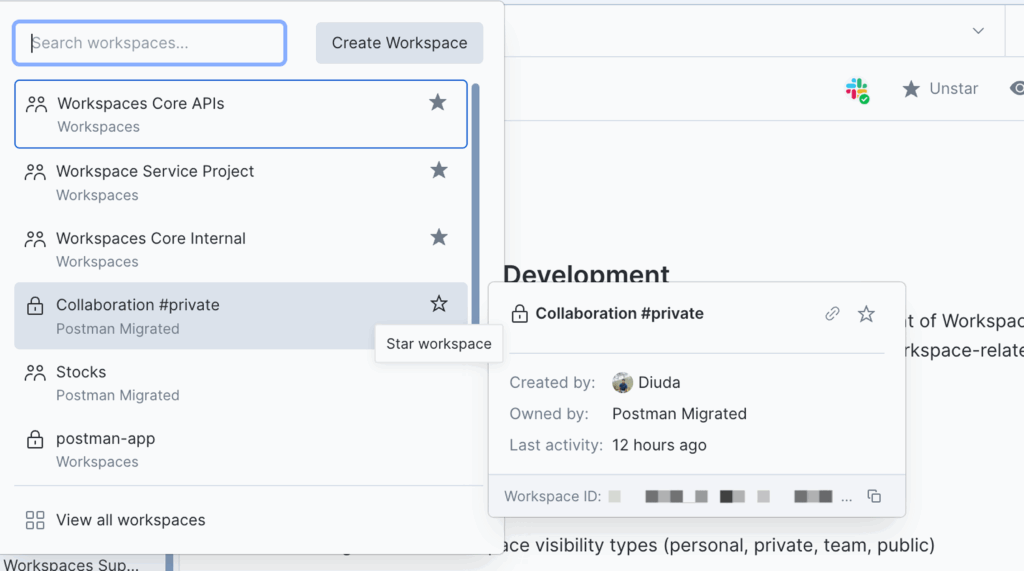
Workspace bookmarks let you pin your most-used workspaces for quick access.
-
CLI command postman request sends HTTP requests directly from your terminal, eliminating context switches for quick tests.
-
Postman power for Kiro IDE brings context about your APIs into Kiro so your AI agents can automatically create and update workspaces and collections, run collections, and more.
-
Early access integrations with Aikido, ReadMe, Pynt, and Stainless help you bring API security insights, reference docs, and SDKs directly into Postman collections. Sign up for beta access to try them out.
Level up with Postman Best Practices
This year, Postman co-founders Ankit Sobti and Abhinav Asthana created a detailed Postman Best Practices resource. It covers key collaboration workflows for Public, Private, and Partner APIs, as well as API test automation guidance, and tips for everything from managing governance to building comprehensive API observability.
Explore Postman Best Practices.
Looking forward
2025 brought features that help you collaborate better, test smarter, and prepare your APIs for AI. We’re listening to your feedback and building the features that solve real workflow problems. Share feedback in the community and stay tuned for what we expect to be a very exciting 2026!
As always, keep it 200,
The Postman Team







What do you think about this topic? Tell us in a comment below.